
 分享:
分享:


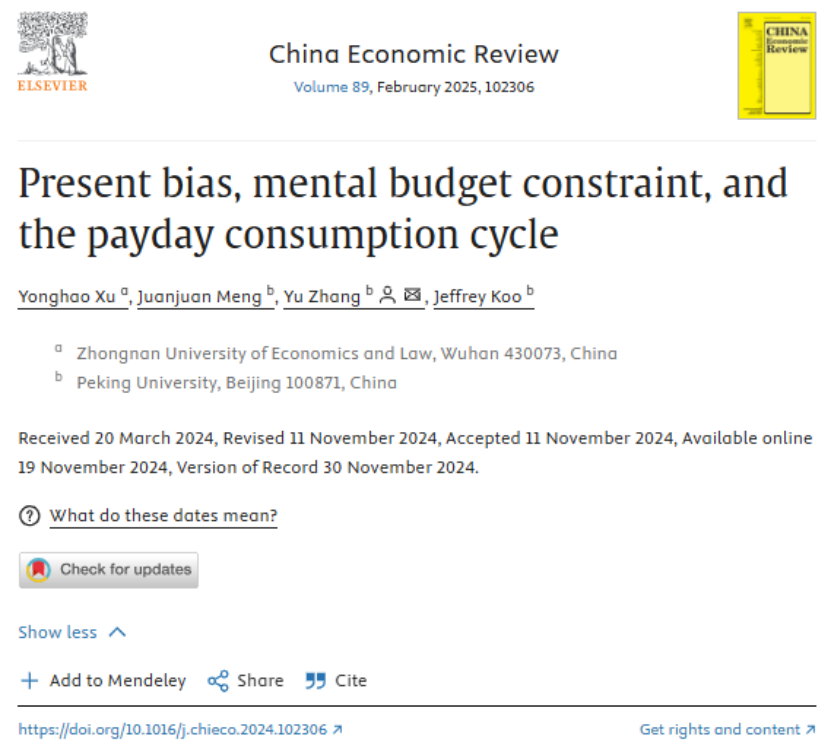
基地研究员许泳昊副教授的论文“Present bias, mental budget constraint, and the payday consumption cycle”在重要学术期刊China Economic Review发表。
摘要:This study investigates the phenomenon of household consumption rising and then dropping after payday, even in the absence of liquidity constraints. Utilizing data from a large bank, we document two findings that jointly provide a rationale for such payday consumption cycle. First, we find that consumption surges around payday only among groups exhibiting strong present bias. Second, we identify the presence of mental budget constraints, where a plausibly exogenous payday surge in consumption predicts a decrease in consumption three and four weeks later, even in the absence of liquidity constraints. These findings suggest that present bias together with mental budget constraints provide an explanation for the payday consumption cycle.
关键词:Mental accounting; Consumption; Self-control; Present bias
论文链接:https://doi.org/10.1016/j.chieco.2024.102306
教师简介
许泳昊,北京大学金融学博士,2021年加入中南财经政法大学金融学院。研究领域包括行为金融、资产定价与家庭金融。研究成果发表在《管理世界》、International Review of Economics and Finance和Economics Letters等国内外期刊中,2022年获批国家自然科学基金青年项目。